A little history
The Enneagram symbol has ancient roots, while the personality system we know today developed more recently through the work of teachers including George Gurdjieff, Oscar Ichazo and Claudio Naranjo.
During the 20th century, these teachings gradually became connected with psychological understanding and the nine personality types recognised today.
An important part of its later development is the Narrative Tradition, pioneered by Helen Palmer and David Daniels. Rather than learning about a type only through theory, the Narrative Tradition places great value on listening to people speak about their own inner experience.
This tradition reflects an important principle of the Enneagram, we are the experts on our own experience, and discovering our type is a process of curiosity and self-observation rather than simply being given a label.
What is the Enneagram?
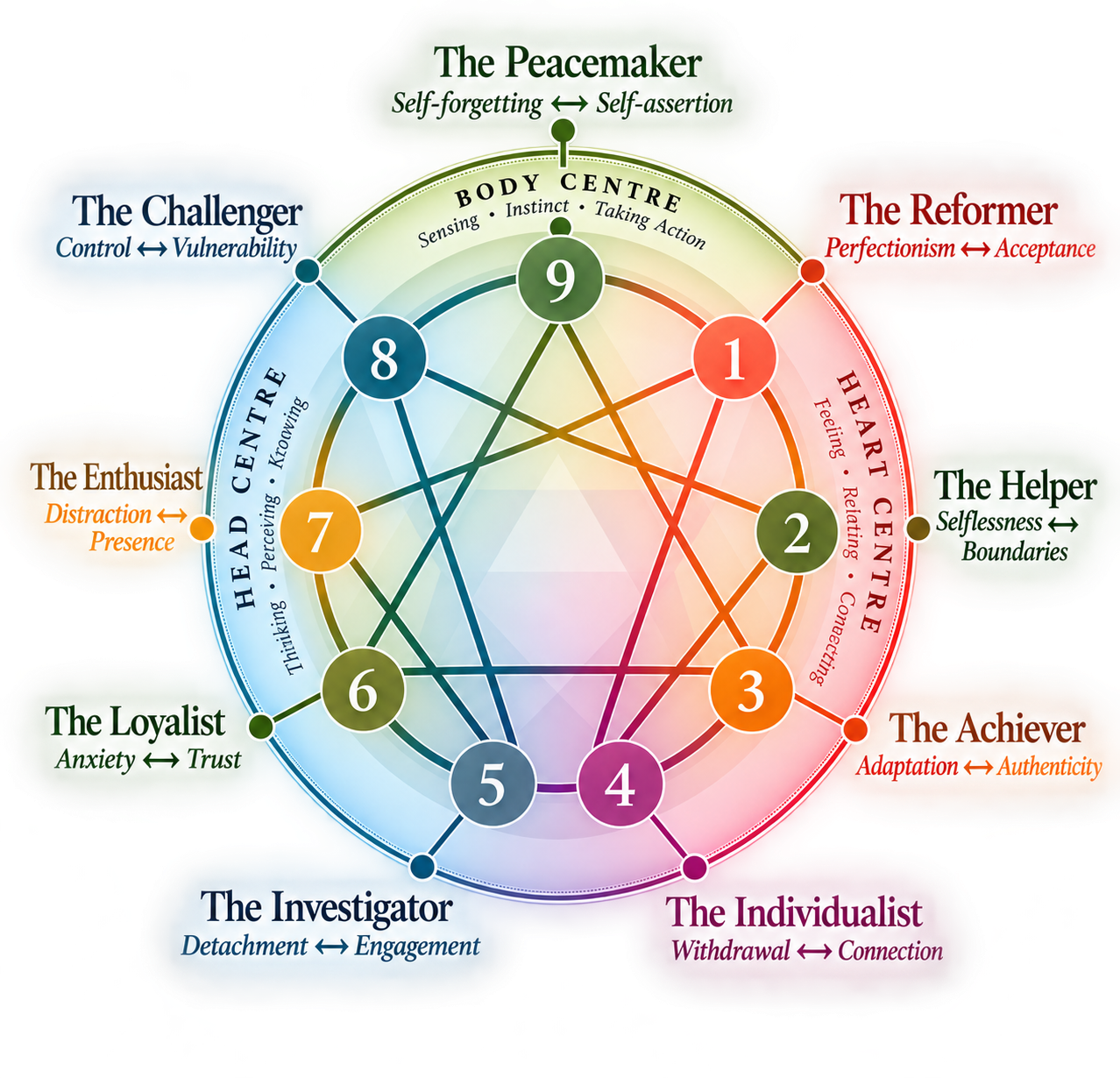
The Enneagram is a personality system describing nine distinct patterns of thinking, feeling and behaving.
Each pattern represents a different way of experiencing, making sense of and responding to the world around us. These patterns influence where we naturally place our attention and how we adapt to our experiences. The Enneagram helps us recognise these often automatic patterns, creating greater self-awareness, choice and opportunity for growth.
How does knowing my type help?
Knowing your Enneagram type can help you recognise the patterns that operate automatically in your life, how you tend to think, feel and respond, particularly when under pressure.
With greater awareness, you can begin to notice these patterns rather than simply acting from them. This creates more choice and flexibility in how you respond to yourself, other people and challenging situations.
Ultimately, knowing your type isn't about defining who you are. It is about becoming less limited by habitual patterns and more able to access the full range of who you can be.